Case file 03 · Explain
Eclipse Across America
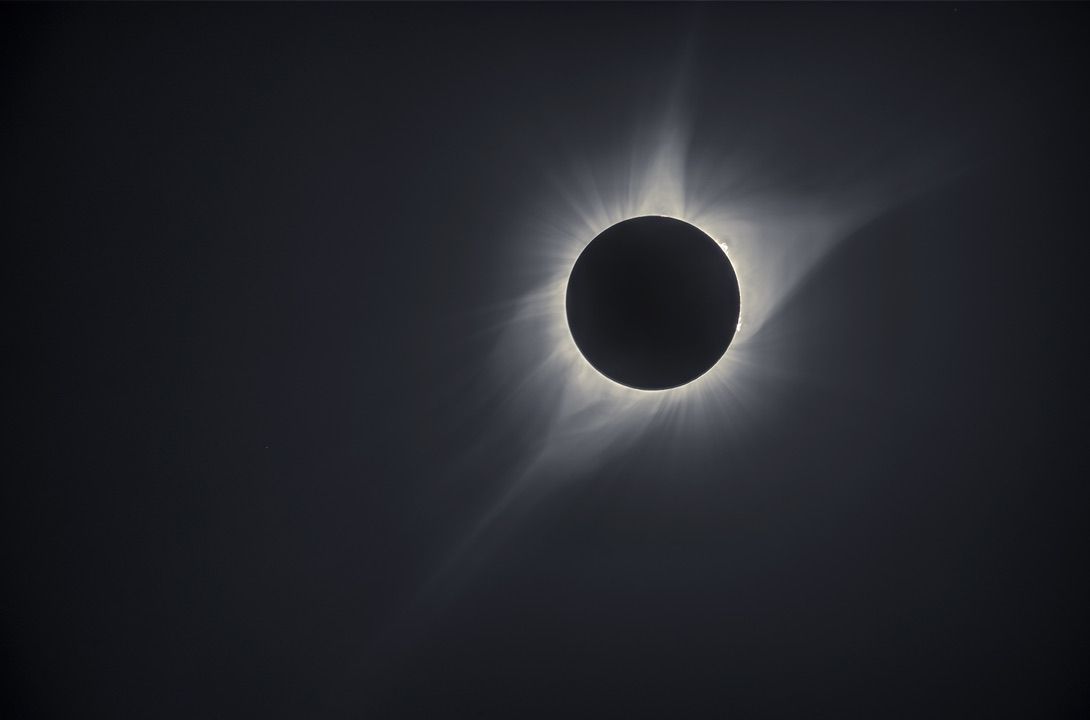
NASA, Aug. 21, 2017. Six cameras, one photographer, about two and a half minutes of totality, and no second take.
The challenge
The 2017 eclipse was the first total solar eclipse to cross the contiguous United States in 99 years, and NASA Headquarters covered it coast to coast. Each center took a piece of the path. NASA Glenn was assigned Jefferson City, Missouri, and sent its video and engineering team. The live feed ran from Glenn's TV truck. The still images were mine.
My role
I was the only photographer on the Glenn team, working as a Digital Imaging Specialist for Alcyon Technical Services. I planned and ran six cameras: one on a telescope mount tracking the Sun, one shooting a time-lapse of the crowd, a backup eclipse camera, and three bodies on me to photograph the event itself. Then I sent images to NASA as fast as I could.
How the day ran
Plan six cameras so no single failure loses the moment
Correct the tracking mount by hand when it drifts
Check every frame and caption before it goes to NASA
File fast, while the public is still looking up
What went wrong
The weather was clear and brutally hot, the closest I've come to heat stroke. The telescope mount's auto-tracking kept slipping, so I corrected it as I went while running the other cameras. It was pure chaos, and I wouldn't have had it any other way. It was my first total solar eclipse.
Outcome
The next morning NASA ran the photograph as Image of the Day, "A Celestial Diamond Ring: Nature's Gift to Humanity." It is in NASA's official 2017 eclipse imagery gallery alongside work by NASA photographers including Bill Ingalls, Joel Kowsky and Aubrey Gemignani, and the University of Chicago used it years later to open a story on what eclipses have meant to people. NASA recognized the public and education engagement team behind the broadcast with a 2018 Honor Award for Group Achievement.
What I'd do differently
I'd make the case for a second photographer. With more astrophotography experience now, I'd also trust the main time-lapse camera enough to walk away from it. And I'd put the solar filter back on the lens the moment totality ended; I didn't, and I won't make that mistake again. In 2024 I watched from Kent with my wife and son, and that time I mostly just took it in.
What it means for explaining AI
A university's AI work is harder to show than an eclipse, but the job is the same. Decide what the public needs to understand, plan for the moment that matters, build in a backup, check every caption, and get the story out while people are paying attention. The eclipse taught me to keep working the problem when the equipment doesn't cooperate.